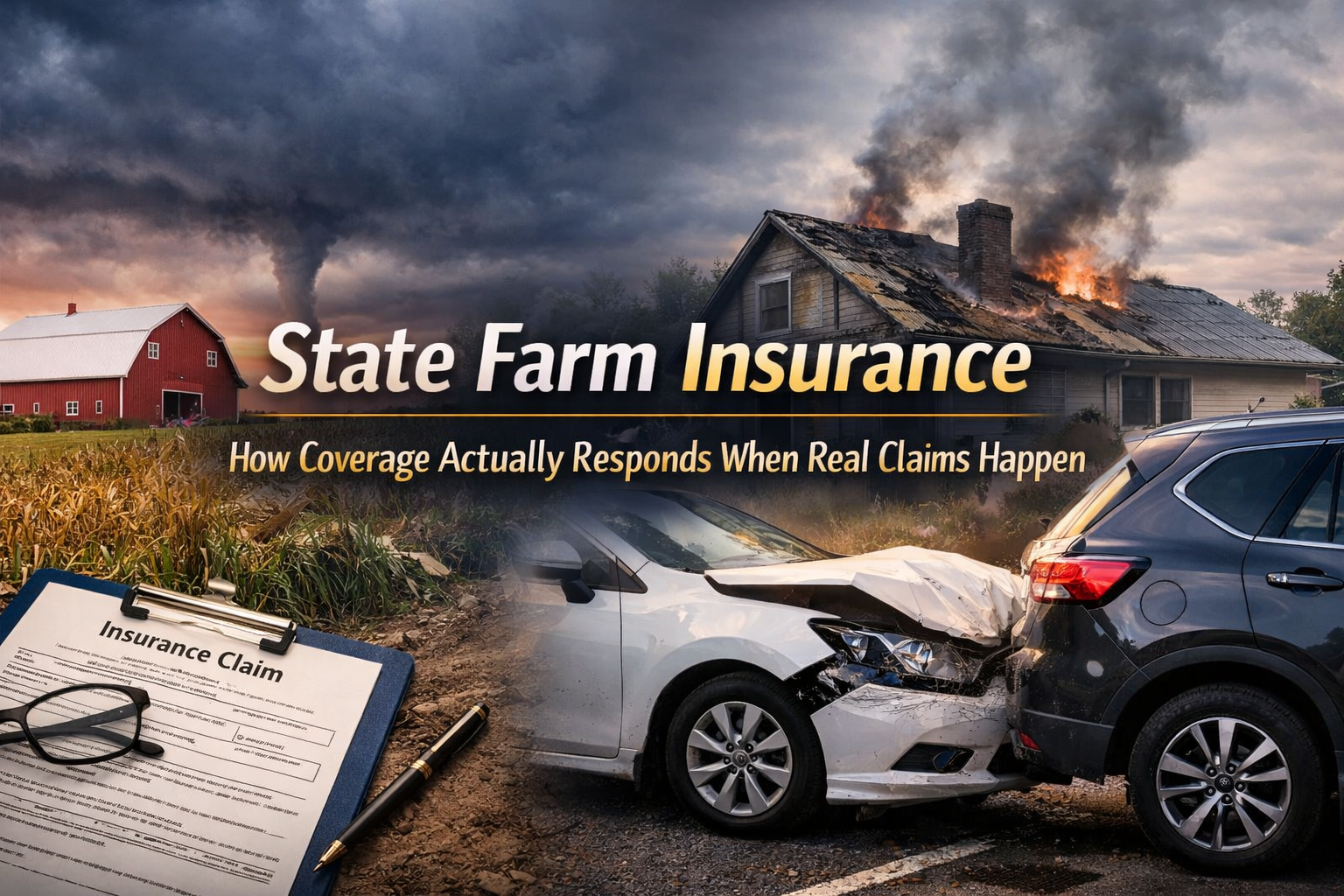
Insurance only feels simple on paper. In real life, it shows up after a hailstorm tears through a Nebraska soybean field, when a house fire in Arizona leaves paperwork scattered with ash, or when a family in Ohio waits months for a payout they thought was straightforward. This page exists for those moments—not to impress, but to steady the ground under your feet.
This is not an overview written for browsers. It’s written for policyholders, farm owners, renters, pet parents, and small operators who live with risk daily and need clarity that survives stress, audits, and weather reports.
How policies behave when real damage enters the picture
Policies are drafted in clean language. Claims rarely are.
We’ve seen losses where coverage technically existed, but timing, documentation gaps, or assessment models changed the outcome. Wind damage measured at the wrong height. Livestock loss evaluated without accounting for regional disease cycles. Personal property claims slowed because replacement values didn’t match local markets.
Understanding insurance means understanding how it behaves under pressure—during adjuster visits, during re-inspections, during supplemental filings. Coverage is not static. It moves with evidence, definitions, and the quality of records kept before the loss ever occurred.
Farm Bureau Insurance
In agricultural states like Iowa, Kansas, and parts of Texas, many growers assume that broad acreage coverage automatically aligns with their operational reality. It often doesn’t.
Farm bureau insurance structures tend to work well for standardized row crops and predictable cycles. The friction appears with mixed-use land, leased acreage, custom farming agreements, or specialty operations. Claims can stall when planting records don’t match county data, or when diversification spreads risk beyond what a single endorsement anticipates.
We’ve reviewed cases where payouts were delayed not because of denial, but because documentation was never built for how the farm actually runs. Insurance responds best when the operation is described accurately, not optimistically.
Coverage Gaps That Only Appear After The Loss
Many policyholders discover limitations only when something breaks, burns, floods, or fails. This isn’t about hidden clauses—it’s about assumptions.
Homeowners in coastal Florida often underestimate deductibles tied to named storms. Small businesses in California sometimes overlook exclusions tied to utility-caused fires. Midwest property owners face basis risk when weather-triggered coverage doesn’t align with physical damage timelines.
These aren’t rare situations. They’re patterns. Policies are built on models; losses happen in real time. The difference matters.
Does State Farm Have Pet Insurance
Pet coverage questions usually come after the first major vet bill, not before.
We’ve seen families in urban Illinois and suburban Georgia assume pets fall under personal property or homeowners extensions. They don’t. Veterinary costs follow a completely different structure, with exclusions tied to breed history, age at enrollment, and pre-existing conditions.
Pet insurance decisions are less about brand trust and more about timing and realism. Enrolling early changes outcomes. Waiting until symptoms appear usually limits options. The policy itself doesn’t judge—but underwriting remembers.
When Premiums Rise Faster Than Risk Feels Real
Premium fatigue is real. Especially for households and small operators managing multiple lines—home, auto, farm, liability.
In states like Colorado and Louisiana, climate volatility has shifted underwriting faster than public understanding. Premium increases often reflect regional loss pools, not individual behavior. This creates frustration when careful policyholders feel penalized for events miles away.
Understanding why premiums move requires looking beyond your own claims history. Reinsurance costs, catastrophe modeling, and state-level loss ratios quietly shape renewal notices. Ignoring this context doesn’t lower costs—but understanding it helps plan around it.
Is State Farm a Good Insurance Company
This question comes up most often after a complicated claim.
The answer depends less on advertising and more on alignment. Large carriers perform consistently for standard risks with clean documentation and predictable loss types. Complexity introduces friction—multiple properties, layered liabilities, agricultural operations, or climate-exposed assets.
We’ve seen smooth outcomes where expectations were realistic and preparation was solid. We’ve also seen frustration where coverage was assumed rather than verified. Insurance companies respond to structure, not emotion. Knowing that changes how you engage with them.
Administrative Strain Nobody Warns You About
Claims aren’t only financial events—they’re administrative marathons.
Missed deadlines, incomplete inventories, mismatched photos, or vague repair estimates can slow progress by weeks. In wildfire-prone states like Oregon or flood zones along the Mississippi, volume alone can overwhelm systems.
Good outcomes often come from quiet discipline: organized records, clear timelines, and understanding what adjusters are required to document. These details rarely make brochures, but they decide real results.
Small Farm Insurance Quote
Small farms sit in an uncomfortable middle—too complex for residential coverage, too small for large-scale agricultural programs.
We’ve worked with operators in Pennsylvania, Vermont, and North Carolina who run mixed-use land: partial production, agritourism, seasonal labor, and off-farm income. Quotes that look affordable upfront sometimes exclude the very activities keeping the farm viable.
A meaningful quote reflects how income is earned, how land is used, and how liability actually flows. Anything else is just a number.
Building Insurance That Survives Uncertainty
Climate volatility, data gaps, and shifting regulations aren’t future problems—they’re current ones.
Insurance works best when treated as a living framework, reviewed with the same seriousness as financial planning or operational strategy. Not annually out of habit, but intentionally—after expansion, after relocation, after environmental change.
We’ve seen this before. The policy that holds up is rarely the cheapest or the most comprehensive on paper. It’s the one that matches reality closely enough to respond when reality gets messy.
This page exists to ground expectations, not elevate promises. Because trust in insurance isn’t built by words—it’s built by outcomes that make sense when they finally matter.