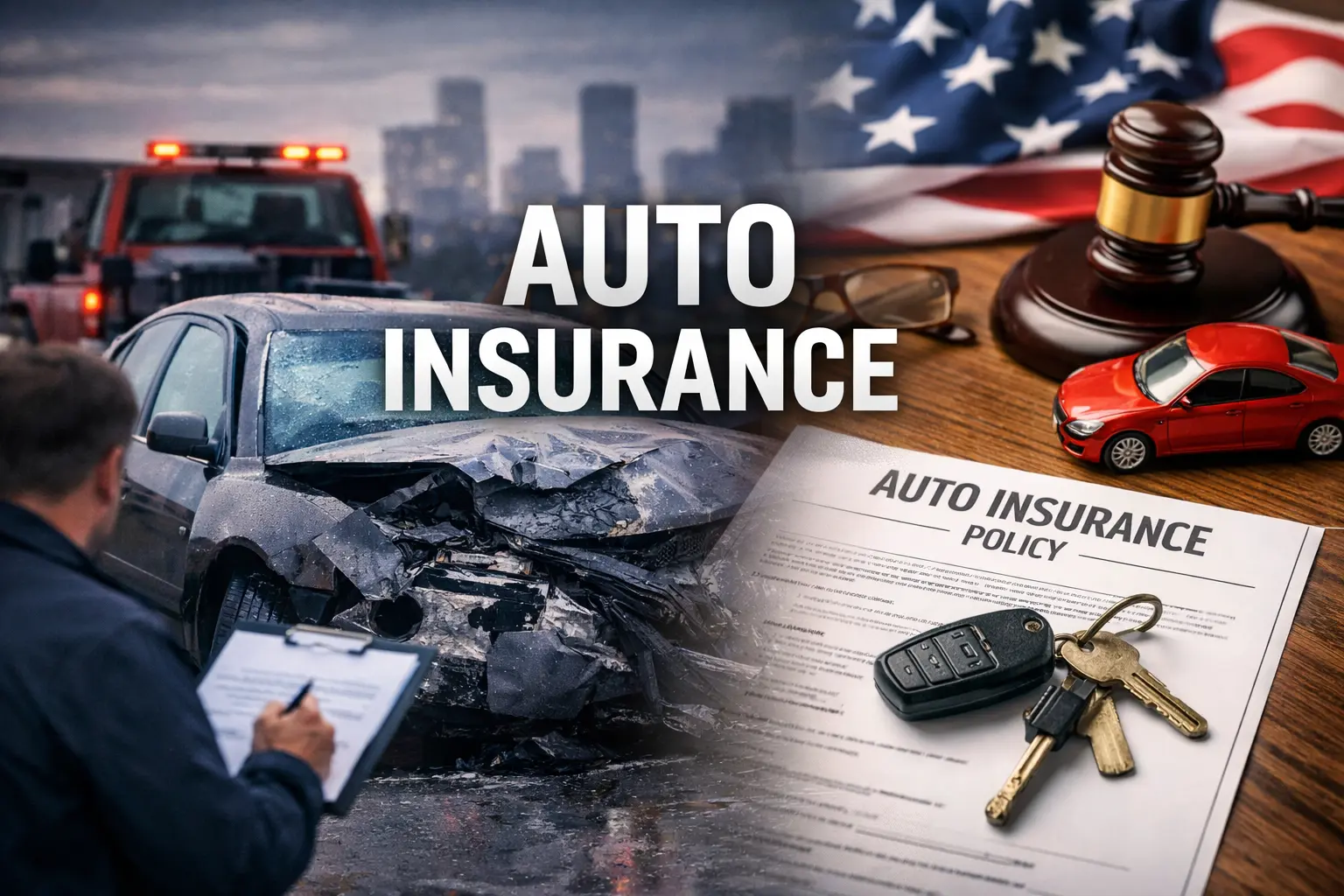
Auto Insurance is not a formality. It is a legal contract that decides how damage, injury, and liability are handled the moment something goes wrong. At USA Insurance Department, we deal with policies after accidents happen. We review denied claims in Houston. We assess underpaid repairs in Los Angeles. We speak with families in Chicago who thought they were fully covered until a liability gap surfaced. This page exists because we have seen what confusion costs people.
What Is Auto Insurance
Most people ask what is auto insurance when they are buying a car. The better time to ask is before signing the policy.
Auto insurance is a state-regulated agreement between you and an insurer. It defines who pays for vehicle damage, medical bills, legal defense, and third-party injury after a covered incident. Each state sets minimum requirements. For example, Texas mandates liability limits that differ from California. Florida operates under a no-fault system with personal injury protection. Those legal structures directly shape how claims are paid.
We have reviewed policies where drivers believed roadside assistance meant rental reimbursement. It did not. We have seen policies where liability limits were technically legal but financially dangerous. A serious crash in Atlanta can exceed minimum limits in minutes.
Understanding the structure matters:
- Liability pays for damage you cause.
- Collision covers your vehicle after impact.
- Comprehensive addresses non-collision losses.
- Uninsured motorist coverage responds when the other driver cannot pay.
Each line item changes how risk transfers. A signature locks that structure in.
Auto Insurance Liability Coverage
Liability coverage protects you from the financial impact of harming others. That sounds simple. The numbers decide everything.
In New York City, minor property damage claims often exceed $15,000. Medical treatment after even a moderate injury can cross $50,000 quickly. When limits are set too low, the insurer pays up to the cap. After that, personal assets are exposed. We have seen wage garnishments follow insufficient limits.
Auto insurance liability coverage usually has three numbers. They represent bodily injury per person, bodily injury per accident, and property damage. A 25/50/10 policy looks affordable. It rarely feels adequate after a serious loss.
Higher limits cost more upfront. They also reduce long-term financial risk. Umbrella policies add further protection when appropriate. The decision should reflect driving habits, city density, asset level, and family situation. That calculation deserves attention.
What Is Comprehensive Auto Insurance
Comprehensive coverage handles events that do not involve a collision with another vehicle.
We have processed claims for hailstorms in Dallas. We have reviewed theft losses in Detroit. We have seen wildfire-related damage in parts of California. In each case, drivers were relieved they carried comprehensive coverage.
What is comprehensive auto insurance in practice? It pays for theft, vandalism, fire, falling objects, certain weather damage, and animal strikes. It does not apply to mechanical failure. It does not cover wear and tear.
Deductibles influence both premium and payout. A $500 deductible results in different claim economics than a $1,000 deductible. Small claims can affect renewal pricing. Filing decisions should consider long-term impact, not just immediate reimbursement.
Auto Insurance Add Ons
Add-ons expand coverage beyond the base policy. Some are valuable. Some are unnecessary for certain drivers.
Common auto insurance add ons include:
- Rental reimbursement
- Roadside assistance
- Gap coverage
- New car replacement
- OEM endorsement
Gap coverage becomes critical for financed vehicles. Without it, a total loss can leave a balance owed to the lender. New car replacement provisions differ by insurer and time frame. We have reviewed contracts where “new” meant within 12 months only.
Each add-on must match a real exposure. A commuter in Phoenix has different needs than a seasonal driver in Minneapolis. The choice should reflect usage patterns and vehicle value.
Temporary Auto Insurance
Temporary auto insurance serves specific, short-term needs.
Drivers relocating between states often require transitional coverage. College students returning home for summer sometimes need limited-term adjustments. Short-term rentals can create temporary gaps.
Some insurers provide policies lasting a few days to several months. Others adjust existing contracts temporarily. The key is verifying start and end dates in writing. We have seen disputes arise from assumed cancellation dates.
Every temporary arrangement must maintain compliance with state minimum requirements. Driving without confirmed active coverage creates legal exposure immediately.
Discount on Auto Insurance
Discounts exist. They require verification and periodic review.
Safe driver discounts reward clean records. Multi-policy discounts apply when bundling home or renters coverage. Telematics programs monitor driving behavior. Good student discounts assist families with young drivers.
We have reviewed renewal declarations where discounts quietly disappeared. A missed defensive driving renewal or lapse in paperless billing can change premium totals. Annual policy reviews prevent unnoticed increases.
A discount on auto insurance should reflect documented behavior or bundling. It should not rely on assumptions.
Auto Insurance Quotes
Auto insurance quotes vary widely because underwriting models differ.
Two insurers can price the same driver differently based on credit factors, claims history, ZIP code, and vehicle repair data. In Miami, flood exposure influences rating. In Denver, hail risk shapes pricing. Repair labor rates in Boston differ from those in rural Ohio.
Quotes must be compared line by line. Liability limits, deductibles, endorsements, and exclusions require matching structure before comparing price. We have seen drivers switch carriers to save $30 monthly while losing rental coverage and uninsured motorist limits.
Accurate quotes require accurate information. Incomplete disclosure can void coverage later. Full transparency protects both parties.

How Claims Actually Unfold
After an accident, timelines matter. Police reports, photographs, and medical documentation influence outcomes. Delayed reporting complicates investigations. Repair estimates require insurer approval. Total loss valuations depend on market data.
Service issues arise when communication slows. We have mediated situations where repair shops and insurers disagreed on parts pricing. We have reviewed claim files where documentation gaps delayed payment.
Understanding this process before an incident reduces stress during one.
Auto Insurance is a financial safety structure that operates quietly until it is needed. The moment of need arrives without warning. At that point, clarity matters more than marketing. Policy language, coverage limits, and endorsements define real outcomes.
Across states and cities, the patterns repeat. Underinsured drivers face asset risk. Incomplete documentation delays payment. Overlooked endorsements create gaps.
Careful review today prevents confusion tomorrow. That approach has guided every policy analysis we have conducted.