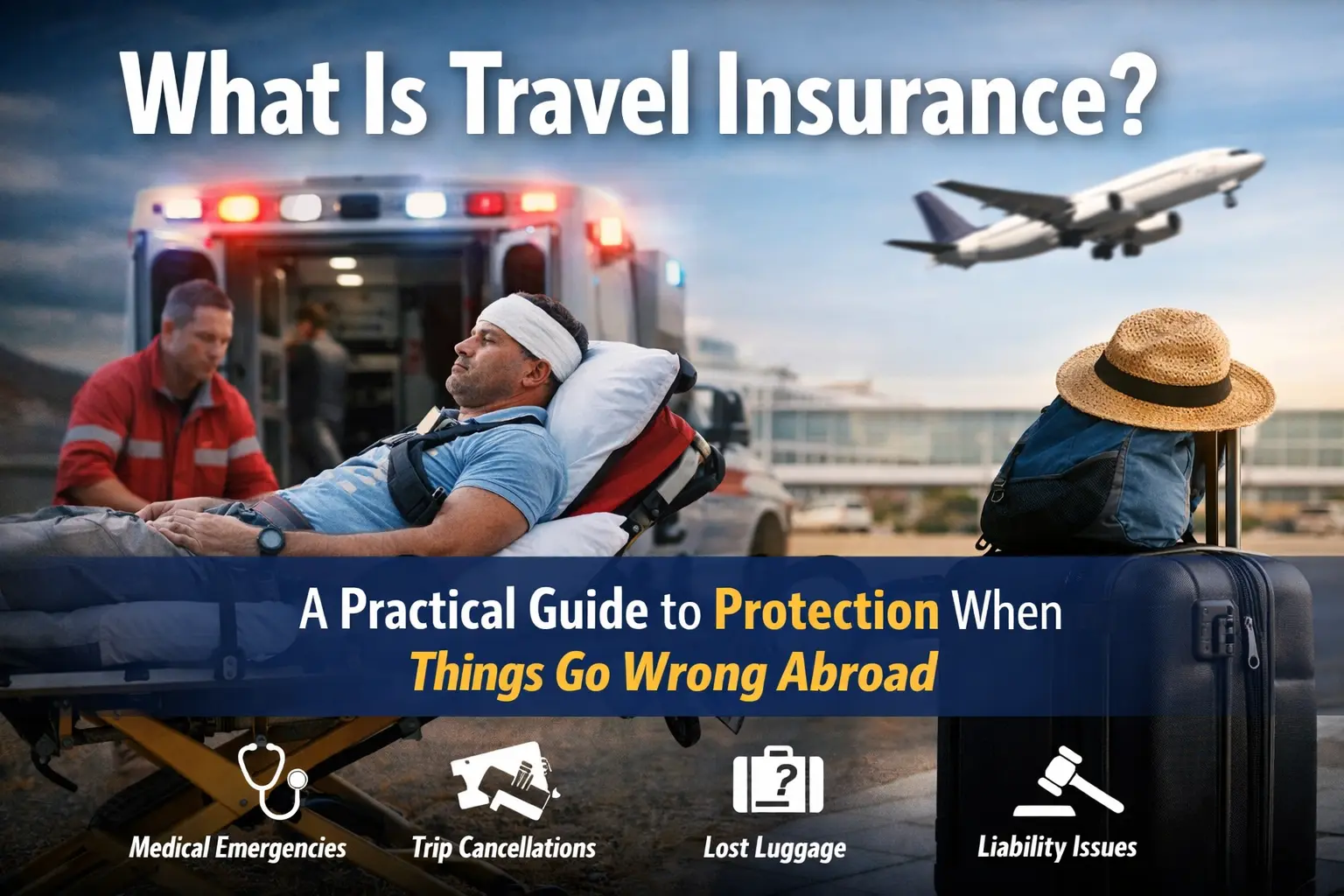
What Is Travel Insurance — And Why Experienced Travelers Never Ignore It
When people ask what is travel insurance, the answer is not a brochure definition. It is something you understand fully only after seeing what happens when a trip goes wrong far from home.
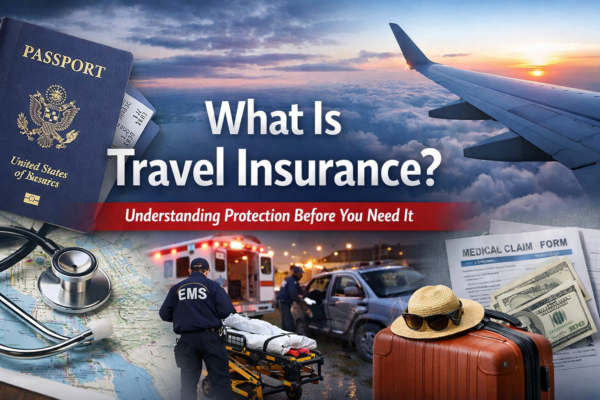
Travel insurance is a financial protection system designed for real travel disruptions. It covers unexpected medical expenses, trip cancellations, lost baggage, emergency evacuations, and liability situations while you are away from your home country.
However, the reality behind travel insurance is deeper.
Airports lose luggage. Hospitals abroad charge upfront. Flights get canceled due to storms. A small accident during a road trip in California or a ski injury in Colorado can suddenly create thousands of dollars in medical bills.
Most travelers only realize the importance of insurance when a hospital receptionist asks for payment before treatment.
Travel insurance exists to prevent that moment from turning into a crisis.
It places a safety layer between an unpredictable journey and your finances.
And when written correctly, it can save far more than the cost of the trip itself.
- What Is Travel Insurance — And Why Experienced Travelers Never Ignore It
- Travel Disruptions Happen More Often Than Travelers Expect
- Medical Costs Abroad Can Escalate Quickly
- Trip Cancellation Protection Is Often the Most Used Benefit
- Lost Baggage and Delays Create Hidden Costs
- Liability Situations Abroad Can Become Serious Legal Issues
- How to Choose a Reliable Travel Insurance Policy
- Why Travel Insurance Is Becoming Essential for International Travel
- Frequently Asked Questions
- 1. What is travel insurance in simple terms?
- 2. Is travel insurance mandatory for international travel?
- 3. Does travel insurance cover medical treatment in the United States?
- 4. When should travel insurance be purchased?
- 5. Does travel insurance cover flight cancellations?
- 6. Can travel insurance help during medical evacuation?
Travel Disruptions Happen More Often Than Travelers Expect
Every travel season brings situations people never planned for.
A family flying from New York to London misses their connecting flight because of a storm delay in Chicago. Airline responsibility stops at basic rebooking. Hotel costs for the extra night fall on the traveler.
A student studying abroad in Boston develops appendicitis. The hospital charges thousands of dollars before surgery.
A tourist driving along the Pacific Coast Highway gets into a minor accident. The rental car company charges repair costs and administrative fees.
None of these travelers expected problems. Yet each situation created financial pressure within hours.
Travel insurance works quietly in the background during such moments. It activates assistance services, pays covered expenses, and helps coordinate emergency support when travelers cannot manage the situation alone.
That is why experienced international travelers treat insurance as part of the trip planning itself.
Not as an optional add-on.
Medical Costs Abroad Can Escalate Quickly
Healthcare systems vary widely across countries. In the United States especially, medical treatment can be extremely expensive for visitors.
An emergency room visit can cost several thousand dollars. Hospital stays can multiply that number quickly.
Travel medical insurance is designed to absorb these shocks.
Coverage typically includes:
- Emergency medical treatment
- Hospitalization costs
- Ambulance services
- Emergency dental treatment
- Medical evacuation to another facility if required
Consider a traveler visiting Florida who suffers heatstroke during summer travel. Hospital monitoring, tests, and overnight care can easily exceed $10,000.
Without insurance, the hospital requires payment.
With insurance, the provider coordinates with the hospital and handles covered expenses according to policy terms.
That difference alone explains why travel insurance matters.
Trip Cancellation Protection Is Often the Most Used Benefit
Travel plans are fragile. Even the most organized itinerary can collapse due to events outside your control.
Trip cancellation insurance protects the money already spent on flights, hotels, tours, and cruise bookings.
Common covered situations include:
- Sudden illness before departure
- Family medical emergencies
- Severe weather disrupting travel
- Airline strikes or transportation shutdowns
- Natural disasters at the destination
Imagine planning a family vacation to Hawaii months in advance. Flights, hotels, and activities are prepaid.
A week before departure, a medical issue prevents travel.
Without cancellation coverage, most of the trip cost disappears.
With travel insurance, eligible expenses can be reimbursed based on policy coverage.
It does not remove disappointment. But it protects financial loss.
Lost Baggage and Delays Create Hidden Costs
Airlines handle millions of bags every day. Even with modern tracking systems, luggage delays still happen.
Travel insurance steps in when baggage disappears or arrives days late.
Coverage typically includes:
- Compensation for lost luggage
- Reimbursement for essential clothing and toiletries
- Coverage for damaged items
Imagine arriving in Seattle for a conference while your suitcase travels to another airport. Buying clothes, chargers, and essentials becomes unavoidable.
Insurance policies allow reimbursement for these purchases within policy limits.
These small reimbursements often turn an exhausting situation into a manageable inconvenience.
Liability Situations Abroad Can Become Serious Legal Issues
One of the least understood protections in travel insurance is personal liability coverage.
Travelers sometimes unintentionally cause property damage or injury while abroad.
Examples happen frequently:
A cyclist accidentally damages a parked vehicle.
A traveler knocks over expensive equipment in a hotel lobby.
A visitor’s child breaks valuable items in a vacation rental.
In many countries, the individual responsible must compensate the damage.
Personal liability coverage helps manage these claims and legal expenses.
This type of protection becomes especially important during long international stays.
How to Choose a Reliable Travel Insurance Policy
Choosing the right policy requires more attention than simply picking the cheapest option.
Experienced travelers examine several details first.
Coverage Limits
Medical coverage limits should match the destination’s healthcare costs. For travel to the United States, higher limits are often recommended.
Pre-Existing Condition Rules
Some policies restrict coverage for existing medical conditions unless certain conditions are met.
Emergency Assistance Services
Reliable insurers operate 24-hour assistance centers that help travelers locate hospitals, arrange evacuation, or coordinate emergency transport.
Clear Claim Procedures
Policies should explain how claims are filed and what documents are required.
These details determine whether insurance actually works when needed.
Price alone never tells the full story.
Why Travel Insurance Is Becoming Essential for International Travel
Global travel has changed significantly over the past decade.
Air travel disruptions have increased. Healthcare costs have risen. Border regulations and travel requirements have become more complex.
As a result, travel insurance is no longer viewed as an optional safety net.
It has become a standard part of responsible travel planning.
People insure their homes and vehicles. Travelers increasingly insure their journeys for the same reason.
Unexpected situations do not wait for perfect timing.
Travel insurance simply prepares you for them.
Frequently Asked Questions
1. What is travel insurance in simple terms?
Travel insurance is a policy that protects travelers from financial losses caused by trip cancellations, medical emergencies, lost baggage, or travel disruptions during a trip.
2. Is travel insurance mandatory for international travel?
Some countries require proof of travel medical insurance before issuing visas. Even where it is not mandatory, it is strongly recommended because healthcare costs abroad can be extremely high.
3. Does travel insurance cover medical treatment in the United States?
Yes, many policies cover emergency medical expenses in the United States. However, travelers should choose plans with higher medical coverage limits because treatment costs there are significantly higher.
4. When should travel insurance be purchased?
Travel insurance should ideally be purchased soon after booking flights or accommodations. Early purchase allows trip cancellation protection to apply to more situations.
5. Does travel insurance cover flight cancellations?
Yes. If a cancellation occurs due to covered reasons such as illness, severe weather, or airline disruptions, travel insurance can reimburse prepaid travel expenses.
6. Can travel insurance help during medical evacuation?
Yes. Many policies include emergency medical evacuation coverage, which pays for transportation to a suitable medical facility or back to the traveler’s home country if necessary.